Divider curtain full-seal magnets (two-panel)
StatusPlanned
CategoryCabin
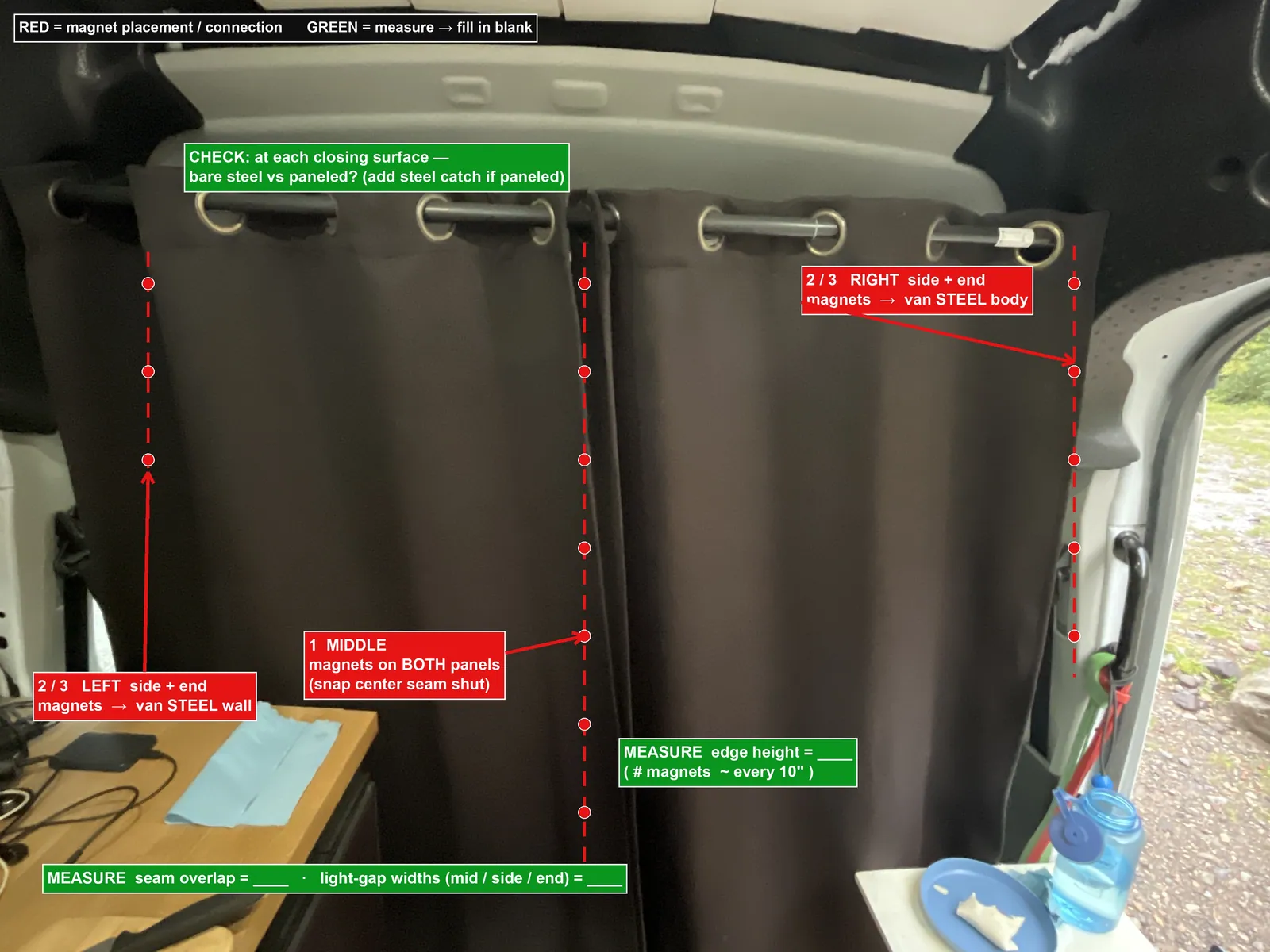
- What: Add magnets to the interior cabin divider curtain (two grommet panels on a cross-van rod. distinct from the P20 cab divider; see photo) so it completely seals/closes with no light or privacy gaps. Three closure points to seal: the middle (where the two panels meet), the sides, and the ends (which snap to the van's steel body). (Van body is steel. the end magnets grab bare metal directly.)
- Middle (center seam): sew/glue mating neodymium magnets down the leading vertical edge of both panels so they snap together and close the center gap. Check polarity so the mating magnets attract (not repel). Space ~every 8-12".
- Sides (panel edge → wall): magnets along the outer vertical edges to pull each panel flat against the adjacent wall. Where that surface is bare steel → magnet grabs directly; where it's paneled birch / carpet → mount a small steel catch plate/disc (VHB tape or screwed) as the target.
- Ends (→ van metal): the end/edge magnets snap to the bare steel of the van body (rib / door frame / pillar), pinning the curtain shut and killing the edge light gap.
- Magnet spec: disc/block neodymium (housed/countersunk) or sew-in magnetic snaps. thin magnetic tape is too weak for a heavy blackout curtain. House/countersink them so they don't tear the fabric; verify mating polarity attracts.
- Need to buy: neodymium magnets (housed/countersunk or sew-in magnetic snaps); steel catch plates/washers + VHB tape or screws (for any non-steel side/wall surfaces); fabric tabs/pockets + thread or fabric glue to mount them
- Tools: needle/thread or fabric adhesive; drill ✅ (only if screwing steel catches)
- Measure/decide: panel leading-edge + side-edge heights → # of magnets (~every 10"); which closing surfaces are bare steel vs paneled (need a catch); center-seam overlap; light-gap widths at middle / sides / ends
Photos